
ACGC Science, Technology, Engineering, Art, and Mathematics (STEAM) Teacher Laura Bianchi is passionate about what she does, like really passionate!
“I just love it and could talk about it every day,” said Bianchi.
The plan was to launch STEAM in the elementary grades as a special class like physical education or music. Bianchi was asked to step in as STEAM teacher and though she didn’t have a ton of resources, she got to work finding more and ended up connecting with STEM and STEAM education resource Carly and Adam which offers kits, project ideas, and more while offering a club for other teachers, which Bianchi quickly joined. She started building a curriculum and a plan for the program that connected with what students were learning in other parts of their day.
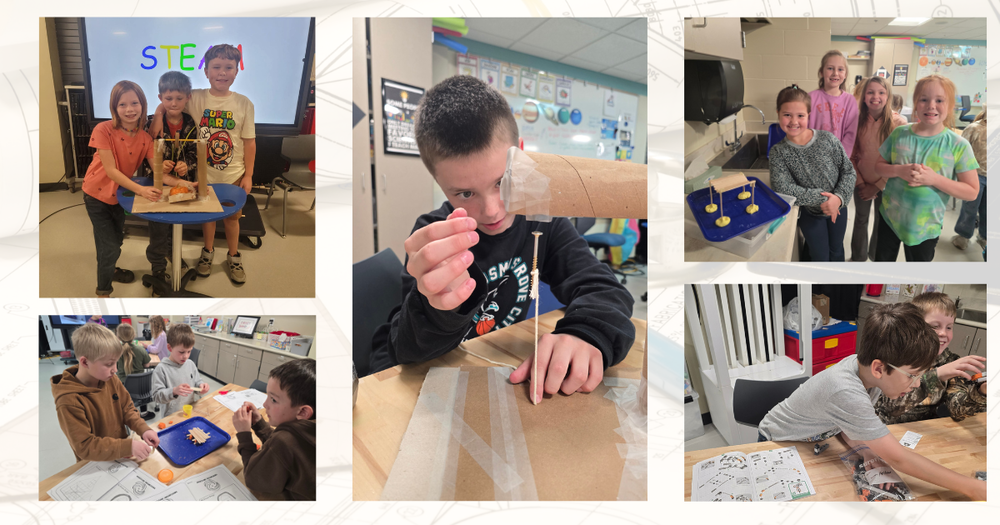
“Everything we do is related to a story that we read and based on the science standards,” said Bianchi. “We use the engineering design process to work towards a solution to a weekly question that leads to a challenge. Students have a journal and they are able to imagine on their own what the best way to solve a problem is, then they work in teams to share their ideas and pick the one they think will solve the problem best.”
With between 20-40 minutes to work on their solution, students get right to work trying things out, making adjustments, and trying again. At the end of the class, they get to present their solution to the rest of the class. Students are able to pick their own teams and are divided up by table, each one getting a different name that relates to a STEAM-based career. They might be charged with levitating a screw, building a pulley to lift a pumpkin, or creating something out of a variety of materials, but the lesson is always the same, it’s OK to make mistakes.
“Sometimes it just doesn’t work out so we have to learn what we could do differently next time and what went wrong,” said Bianchi. “We just keep going and trying new things!”
Each grade in K-4 also has different space-related projects that they work on while learning about various important people in the world of space exploration. Kindergartners learn about Neil Armstrong and make parachutes, first graders learn about astronaut Mae Jemison and make bottle rockets, second graders make straw rockets while learning about Amelia Earhart, and third graders make hot air balloons out of tissue paper while learning about Ellen Ochoa. NASA and space travel come up a lot, especially during the Artemis II mission, and it’s not uncommon to see students (and Bianchi) wearing NASA-themed clothing.
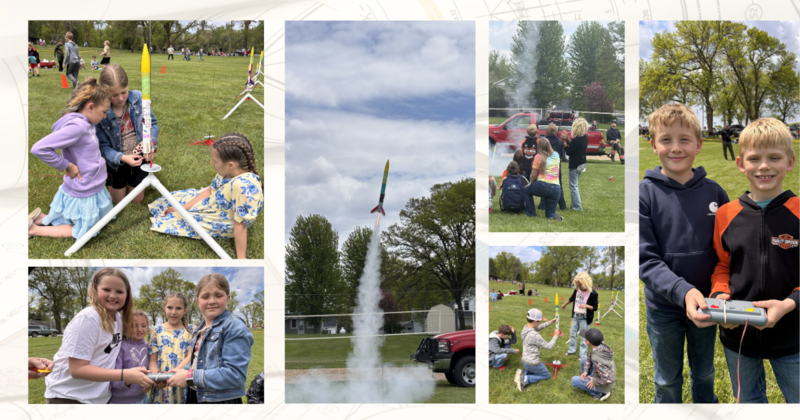
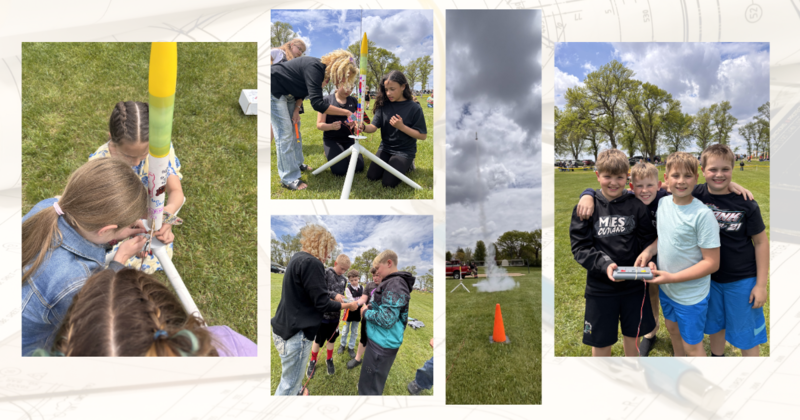
All of this learning through the early elementary years leads to the big moment in fourth grade when students get to collaborate with their team to build and ultimately launch a rocket. Each Green Eggs brand Model Rocket uses a C-class model rocket engine and is piloted by a raw egg that needs to be protected with padding to keep it safe. There is a ton of work and planning that goes into the process to prepare for launch day.
“Rocket launch day is a big deal,” said Bianchi. “We have the fire department and police department there to make sure everyone is safe, and it feels like the whole town is out at Centennial Park watching. After the rockets launch and land, the students will check to see if their egg survived and let the audience know with a thumbs up or thumbs down.”
The rockets are equipped with tracking smoke so they can be followed in the sky, but there’s always a brief moment of losing sight of it until it comes back into view. Each year the students launch 18 rockets after building, decorating, and practicing every aspect of the launch including who will hold the button down and where they should look when they hold it down.
“They did such a great job this year and this is really not meant to be easy,” said Bianchi. “We call the things we do challenges for a reason. You really have to think outside the box and sometimes destroy the box completely. STEAM is important because kids get to create on their own and have a lot of great ideas that they can’t always share with other people. We have kids who may have struggles in the classroom but they really come alive in STEAM.”
The program is still taking shape with lots of new items being donated from homes or other businesses including 3M who donated a big supply of tape. Students love taking part in the different challenges and also try to earn star stickers because once they get seven stars they are able to create whatever they want and bring it home. Students have created playhouses for their dolls, cat toys, and just about anything else you can imagine.
Students aren’t just learning how to do these tasks, they are learning about collaborating, listening, standing up for their ideas, and that it is OK to make mistakes. Bianchi says that it’s fun to watch the teams figure out how to work together and use their strengths. One student can be the visualizer, the other can put something together based on what other people share, and there are many other ways to use the talents of each student. All while being encouraged by a very passionate teacher.
“I really feel like I was born to do this,” said Bianchi. “I taught second grade for 19 years and science was always my favorite because it wasn’t about telling them what to do but letting them figure it out. I know that if the lessons I make aren’t fun for me, they won’t be fun for the kids!”
She’s still got more ideas for the future including ways to make a lesson about chain reactions go through the whole school or building a car out of found objects. For now, the students of ACGC are in good hands when it comes to learning how to apply their learning to real-world situations.