
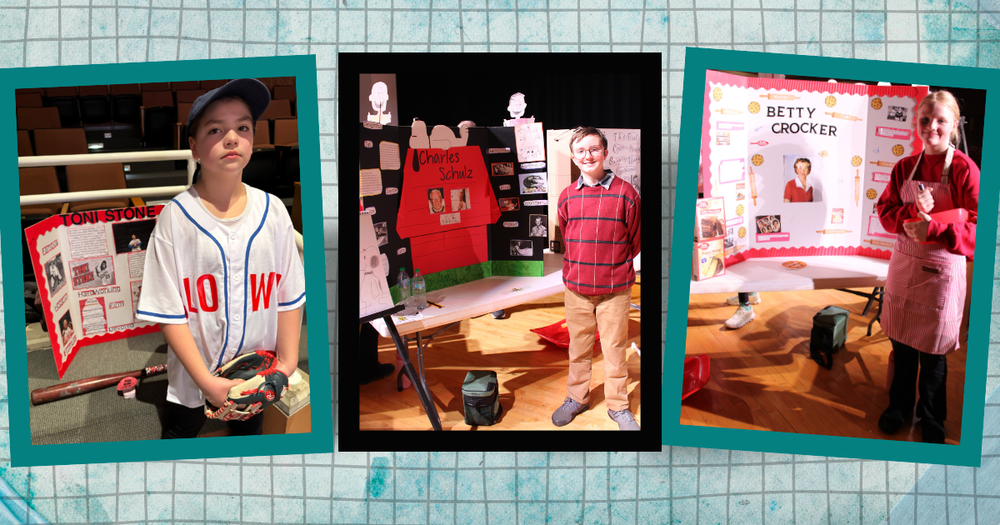
The Living Wax Museum is a three-month, immersive, project-based learning experience where 6th grade students are able to explore Minnesota history in a deeply personal and creative way. As part of the assignment, each student selects a significant Minnesota historical figure or event tied to a birth year or key moment, and then spends weeks researching, writing, designing, and preparing to truly embody that moment in history.
For the project, students create a tri-fold display filled with research, images, and key facts about their subject. They also write and memorize a speech, develop a costume, and in many cases even add 3D elements or props to enhance their presentation. The project culminates with an event in the ACGC Theatre, where students stand in character for two full hours, presenting to parents, community members, and peers not as a presentation, but as the living version of their historical figure.
What stands out most is that this project blends history, literacy, public speaking, performance, and art into one authentic experience—and the impact it has on students is undeniable. One of the most powerful themes in their reflections is the journey from fear to confidence.
Madison Manselle captured this perfectly when she wrote, “When I stepped onto the stage, I felt extremely nervous… but once my mother, father, grandmother, and my friends’ parents came to see my presentation I was much more comfortable.”
Brooklyn Nelson echoed that same experience, saying, “I was a little nervous when the first few people came but after that it got easier.”
Ava Whitcomb shared the kind of moment every teacher hopes for, “When I said my speech I didn’t look at my card once. And I was pretty proud of myself for that!”
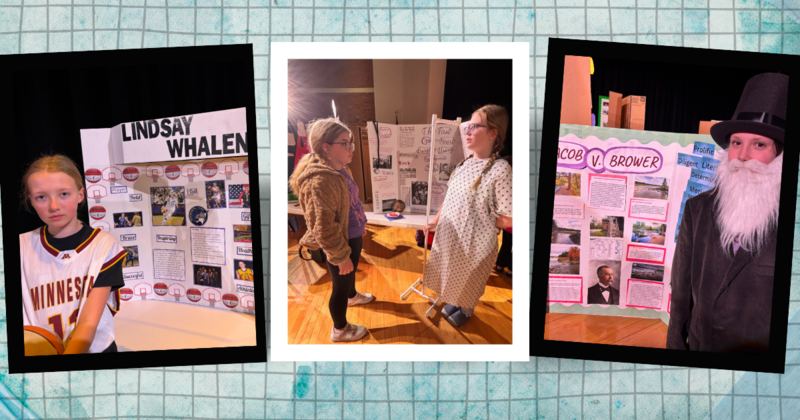
That shift—from anxiety to ownership—is something you can actually watch happen in real time during the event. Visitors move around the room interacting with different characters and hearing information from the historical figure standing in front of them. Students don’t just enjoy the assignment, they feel a deep sense of pride in their work.
Shelby Chase wrote, “It was a lot of work but I think I did really well and I am proud of myself!”
Hannah Amor shared something even deeper, saying, “I don’t think I showed much confidence but I felt proud inside.”
That internal pride—that quiet realization of “I did this”—is incredibly meaningful, especially at the middle school level.
The project also builds an incredible amount of perseverance and stamina, which students were very honest about. This is not something that you do once and then you’re done, students give their speech in character as many times as they are approached by visitors.
Mila Sietsema described the physical and mental challenge of presenting over and over again: "Once I got to the 30th person I was done but I still pushed!”
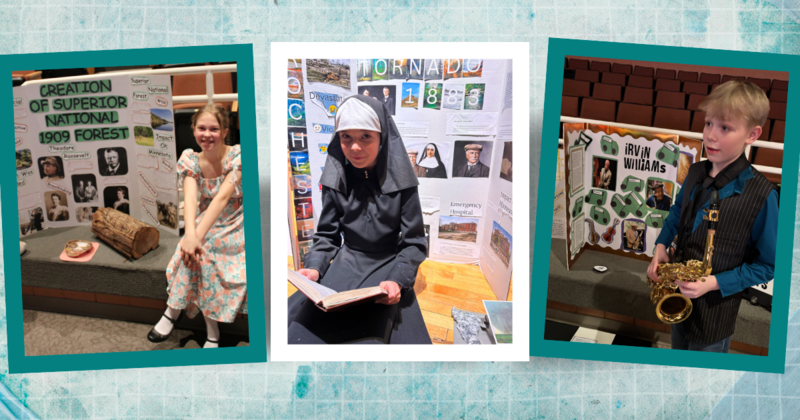
“I learned from the experience that it takes a lot just to stand for 2 hours,” added Brody Stegeman. “It’s a great idea to get to know a famous person in Minnesota and tell it to other people, which makes it exciting.”
Even when students were tired, they understood the purpose behind the work—and that’s powerful. Because there are so many components to this project, it can really seem like a lot for students to be able to pull together.
“To prepare for my presentation I had to make my board, speech, costume, and 3D,” said Dakota Unicorn. “I learned that I am good at memorizing my speech!”
Madison also demonstrated real-time problem solving, “One challenge I faced was remembering my speech but I overcame this challenge by smoothly adjusting my speech without stuttering.”
These are real-life skills—adaptability, resilience, and thinking on your feet. Creativity is another huge component of the project.
Adler McNeil shared, “I liked dressing up as Charles Schulz and it was amazing to show my drawings of Charlie Brown and Snoopy.”
Students weren’t just presenting facts—they were interpreting history, making artistic choices, and connecting personally to their topic. Visitors also got to see students deeply engaging with content in meaningful ways.
For example, Madison described learning about a groundbreaking medical moment, writing that the patient was “basically a human popsicle for five and a half minutes,” showing not only understanding but the ability to explain complex ideas in a memorable way.
At the end of the day, what makes this project stand out is that it goes far beyond memorizing dates or facts. Students are living the history, sharing it, and taking ownership of their learning.
They learn how to speak to adults, manage nerves, think on their feet, and take pride in their work. And when you see a 6th grader standing in costume, confidently teaching a room full of people about Minnesota history—you realize this is the kind of learning that sticks.
Brooklyn Nelson offered this advice to future students, “You got this, don’t be afraid, be proud and confident.”
“It’s really fun,” Dakota Unicorn added, reminding us that even through the hard work, students found joy in the process.